
How True Play Differs from Playful Activities
When you visit our website, you'll notice that the first title we give our program is truly play-based.
I added the word "truly" because our program differs greatly from the hundreds that now claim they are play-based. Yes, many of those programs use fun in their activities and allow children time for hands-on learning, but that doesn't make it play.
At Wild Wonders, we consider play to be intrinsically motivated, self-chosen, and child-directed. We want a child to decide - I want to do this, I am choosing to do this, and I am in charge of how and for how long I do this.
Of course, this is within reason. As teachers, we set the routines and schedule. We are in charge of the environment. And we will not let a child's play be unsafe - to themselves, others, or our things.
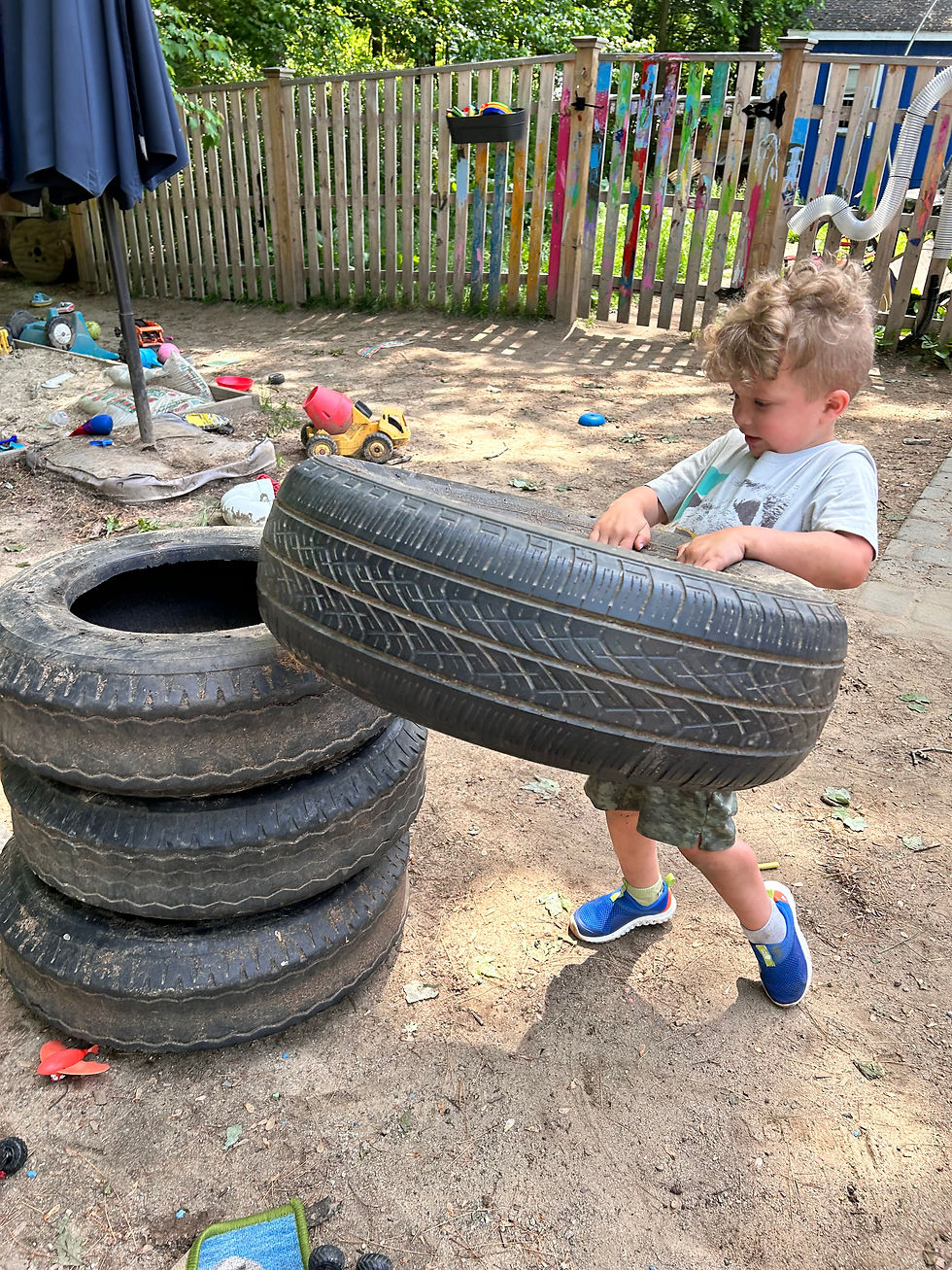
BUT, we, as teachers, do not choose what a child will do. Children are free to choose to play whatever they'd like with the materials available and in the environment provided. Children can walk into our playground and feel that it is a space for children. It is messy and chaotic. It's not for Pinterest, it's not for parents, it's not for pretty pictures - it is actually for children.
I see many classrooms with walls of art that all looks the same. This is a teacher-directed activity. The child has been told what to use, how much to use, how to use it, and what to create. Here, we allow the child to come up with their own ideas, and to use the available materials in whatever way they want. The focus is on the process - the play - not the product.
Take a look on Pinterest for play-based learning and you'll see activity after activity - digging for letters in rice and matching to a laminated alphabet, fly swatters for letter recognition, dramatic play areas set up to look like an apple orchard with buckets for apple picking. Yes, these activities are fun and I'm sure many children enjoy participating in them. But they are not play-based. They are playful but not play.
In these examples, the teacher has chosen what the child will do. The teacher has decided how the materials will be used. The teacher has set the rules. The teacher has limited the chance for a child to think for themselves.
Imagine doing a puzzle. The puzzle has a set number of pieces, all of which need to be used to form the picture. The end picture is already decided and won't change. The pieces only go together a certain way. I love puzzles, I have fun doing them, and we do put puzzles out for our students, but they are not play.
True play is what forces the brain to make more connections. Children are required to test their ideas, to adapt and change the rules, to assert themselves to begin or stop play. During true play, children are challenged to problem-solve, to persevere, to communicate their ideas.
If we take away opportunities for children to play, they start to doubt their own ideas, they can struggle with self-esteem, they may react more emotionally to challenges or avoid challenges all together.
I once had a child, on his first day here, climb up onto a structure the other children had built and were jumping off of. He climbed up, looked at me, and asked "what do I do?"
"Whatever you want to do" I responded.
Now that same child climbs, jumps, decides with confidence. That's what I want for my students. I want them to leave our program knowing they can trust themselves, knowing they have good ideas, knowing they can make decisions and face adversity head-on.
All of that is learned through play - not playful activities, true child-led play.


Comments